Rhythm Recognition

Objectives

  • Discuss cardiac monitoring
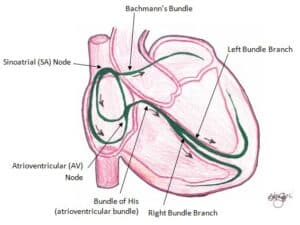
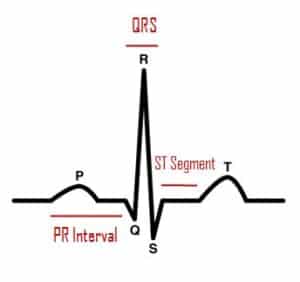
  • Review cardiac electrophysiology
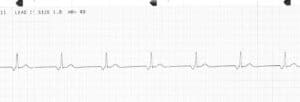
  • Identify normal sinus rhythm
  • Identify compromising and life threatening arrhythmias

Definition of Arrhythmia

A change in the rate, origin or conduction of the cardiac electrical impulses.

Classification of Arrhythmias

Disorders of rate

  • Bradycardia, Tachycardia

Disorders of Impulse Formation (origin)

  • Atrial, Junctional, Ventricular

Disorders of Impulse conduction

  • Conduction is blocked
    • AV blocks:  First Degree, Second Degree, Third Degree
    • Bundle Branch Blocks

Effects on Cardiac Function

  • Depends on:  the age of the patient; rate and duration of the arrhythmia; presence of any heart disease; and the patient’s ability to compensate
  • Tachycardia increases oxygen demands, decreases diastolic filling time and coronary artery perfusion time exacerbating ischaemia.
  • Bradycardia may directly decrease cardiac output, potentially decreasing perfusion status
  • Required treatment depends on the affect the arrhythmia is having on the patient, rather than the mere presence of the arrhythmia itself, i.e. is the patient stable, or is the patient compromised/symptomatic, or is the patient in cardiac arrest!

This category can only be viewed by members.
Shopping cart0
There are no products in the cart!
Continue shopping
0